
How to get the best possible results
2 min read
Orvelle writes and illustrates from the details you share, so the quality of the book follows the quality of the details. Nothing here costs extra. It is all in how you answer the intake.
Be specific, not general
“Grandma was kind” is true and forgettable. “Grandma made chicken soup every Sunday, in the blue pot, while the radio played the ball game” is a scene. Names, dates, places, the exact wording of a quote, the small routines: those are the details the writing and the illustrations are built from. If a detail needs exact treatment, say so: spelling, dates, and family relationships are all checked on the proof.
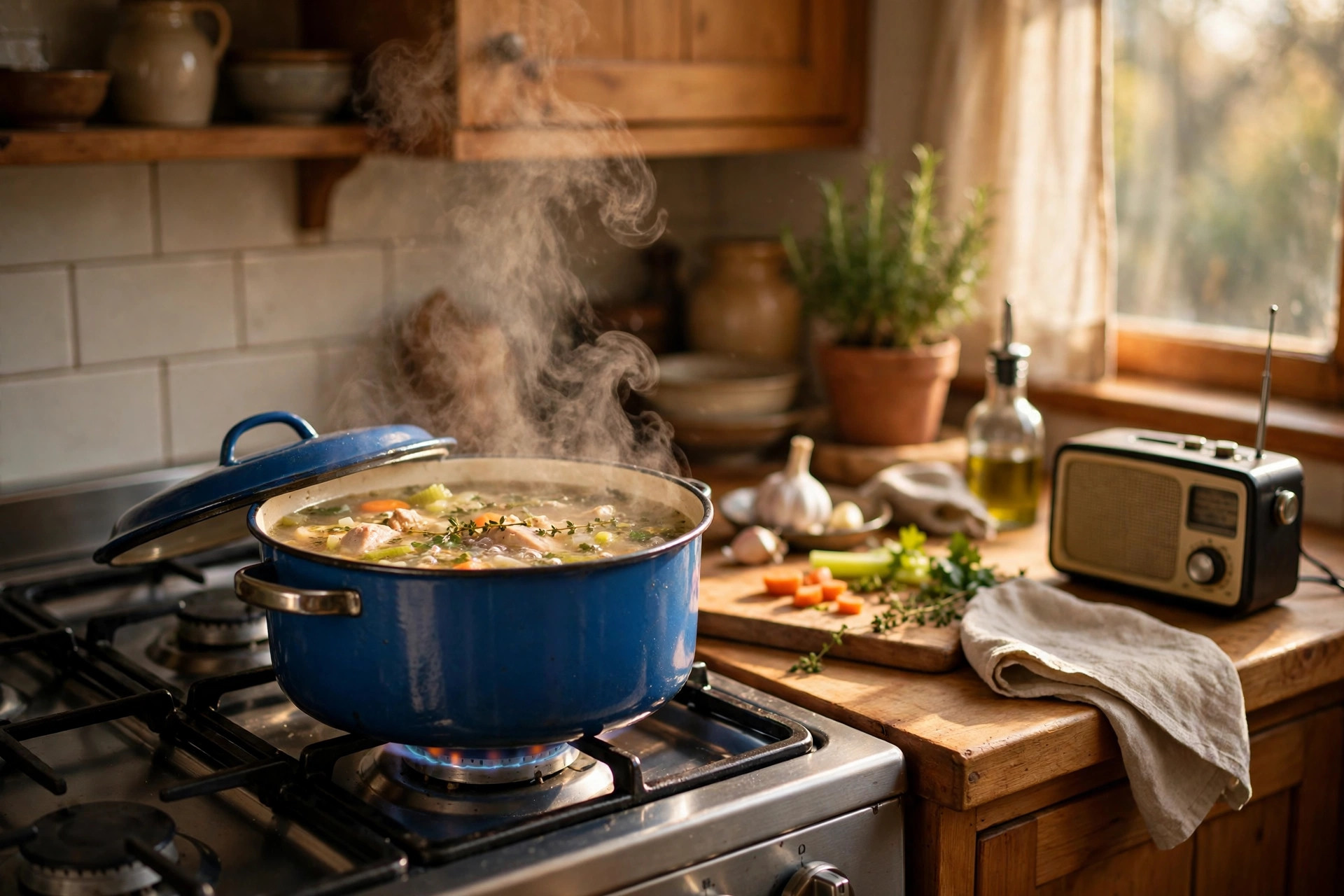
Give the illustrators something to work with
Photos are references that help the illustrators capture likeness and personality. Clear, well-lit photos where the person is recognisable do the most work. You do not need professional photographs. A sharp phone photo of the person as they actually are beats a posed portrait that looks like someone else.

Pick the edition that fits the story
A short story in a big edition feels thin; a long life squeezed into the smallest edition loses the moments that matter. Classic holds 15 spreads, Keepsake 20, Heirloom 30, and Collector 40, and for a recipe book, the limits are 8–12, 12–17, 20–27, and 28–37 recipes. Count what you actually have before you choose, and let the edition fit the story rather than the other way round.

For recipe books, add the story behind the dish
Every recipe in the intake gets one optional short prompt: “Who made this? When do you make it?” One or two sentences is enough. Who used to make it, when it was served, and what it tasted like are part of what makes a family recipe worth keeping, and they sit beside the method rather than being cut for space. That note is what turns a collection of recipes into a family book.

Read the proof like it is the book
The proof is the final opportunity to review content before physical production, and it shows the writing, illustrated scenes, page order, and personalized cover together. Check spelling, names, dates, places, chronology, family relationships, ranks, titles, and quotations. Check likeness and tone too: markings, attire, settings, ages, visual continuity, and whether the writing represents the person, family, companion, or occasion with the intended tone. One revision round is included before print, and nothing prints without your approval. After approval, personalized content choices become final.

Ready to start?
Share your notes and photos. Orvelle writes, illustrates, and sends a PDF proof before printing.
Start your book